Reverse osmosis drinking water systems
Roughly 99% of the contaminants commonly found in valley tap water, removed at the tap you actually drink from. No more hauling bottled water.
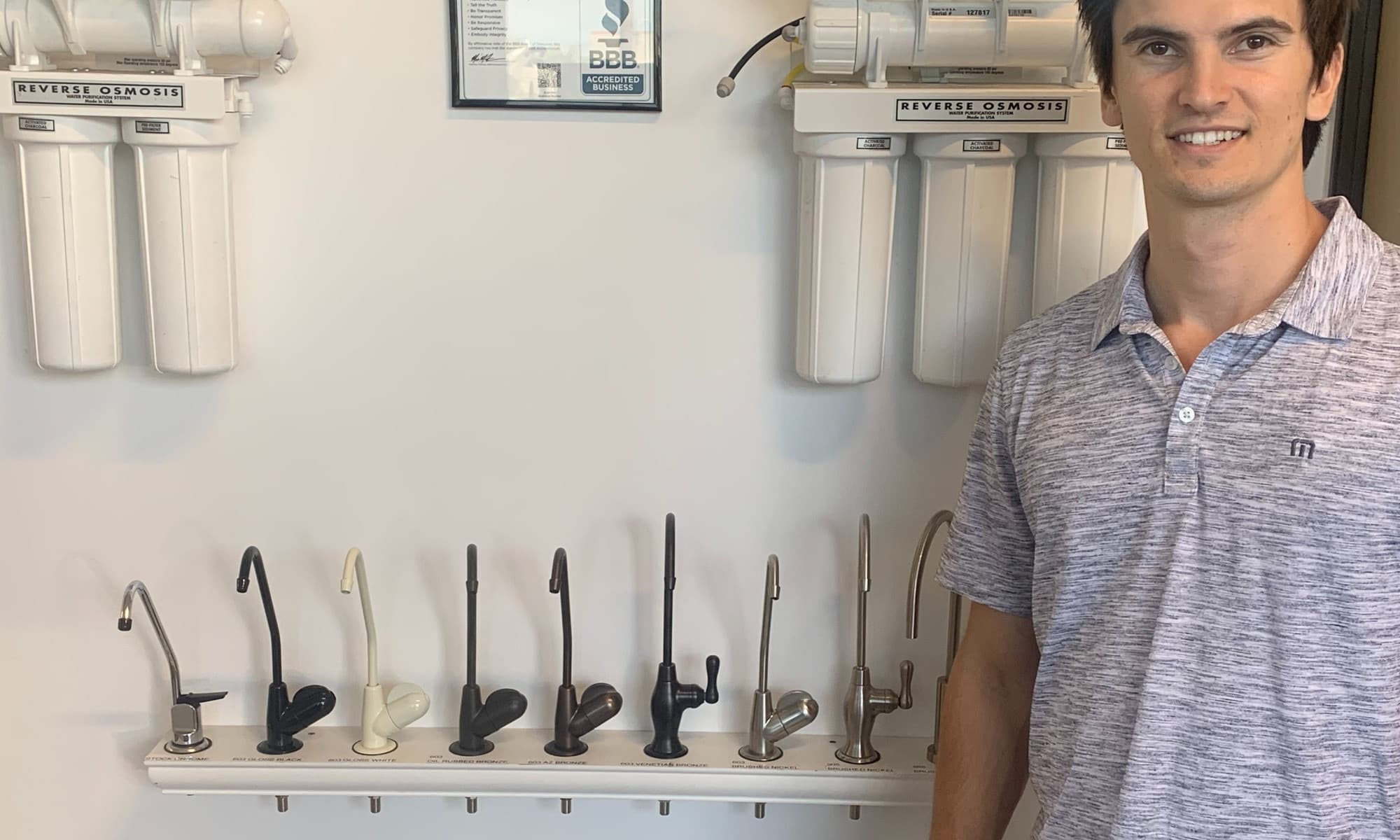
A softener handles scale. It is not a drinking water filter, and it was never meant to be. Reverse osmosis is the other half: a membrane with pores small enough that dissolved solids, metals, nitrates, chlorine byproducts and the taste that comes with them do not get through. It goes under the kitchen sink and feeds a dedicated faucet, and usually the refrigerator and ice maker as well.
What it does for you
Bottled water quality, at the tap
A household drinking bottled water spends real money every month and hauls the cases home. An RO system replaces that with a faucet.
Coffee and ice that taste like nothing
Which is the point. Dissolved solids are why valley ice tastes of the freezer and coffee tastes flat.
Removes what a pitcher filter cannot
Carbon pitchers improve taste and chlorine. They do not touch dissolved solids, arsenic or nitrates — a membrane does.
Fits under the sink
Modern systems are far smaller than the tank-and-manifold setups people picture, and the plumbing is a standard cold-line tap.
How reverse osmosis works
Household pressure pushes water against a semi-permeable membrane. Water molecules pass; almost everything dissolved in them does not, and is flushed to the drain. The clean side fills a small storage tank so a full glass arrives immediately rather than at the speed the membrane produces it.
Before and after the membrane sit sediment and carbon stages — sediment protects the membrane from clogging, carbon removes chlorine that would otherwise degrade it, and a final polish stage handles taste on the way to the faucet.
Softener first, then RO
Feeding an RO system hard valley water shortens membrane life considerably, because the same calcium that scales a water heater scales a membrane. Where a house has both, the softener goes upstream and the RO runs on softened water.
That order is also why the two are usually quoted together. Installing RO alone on 18-grain water works, but you will be replacing membranes far more often than you should.
Filter changes and what they cost
Sediment and carbon stages are annual for most households. The membrane itself runs several years on softened water, and we size the system so those intervals land somewhere realistic rather than requiring attention every few months.
We will show you how to change the pre-filters yourself if you would rather not schedule a visit for it. Some customers prefer we handle it; both are fine.
Common questions
Do I need reverse osmosis if I already have a water softener?
They solve different problems. A softener removes hardness so your plumbing and appliances survive; it does not make water better to drink and it is not a purifier. If your goal is drinking water, that is RO.
Does RO remove arsenic?
A properly maintained RO membrane substantially reduces arsenic, which matters in parts of the valley on groundwater. We test for it as part of the in-home analysis so the recommendation is based on your water rather than an average.
Can it feed the refrigerator and ice maker?
Yes, and it is worth doing. It is a line run from the RO tank to the fridge, easiest at installation time.
How much water does it waste?
Older systems sent several gallons to the drain per gallon produced. Current membranes and permeate-pump designs cut that considerably, which we would rather explain honestly than dodge.